AI story games: how to get a good story out of one
An AI story game writes the next scene when you choose. Five things that make the difference between a story that wanders and one you want to finish.
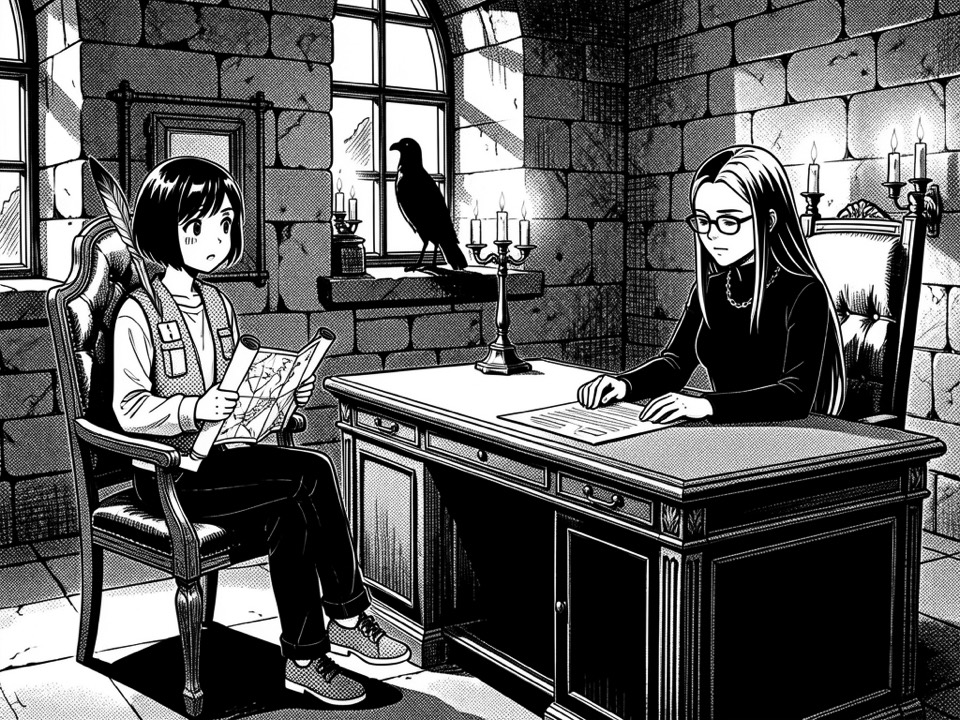
An AI story game is a branching story where the next scene is written the moment you choose. That makes it very different from a book: you can take a choice nobody planned for, or type your own, and the story still answers.
It also means the story is only as good as what it is given. After watching a lot of stories being played on this site, these are the five things that make the biggest difference.
1. Start with a moment, not a world
“A fantasy kingdom with three kingdoms and a magic system based on music” is a setting. It gives the writer nothing to do. “You are the court musician, and the song you were told to play tonight is a signal for an assassination” is a moment: there is a person, a problem and a clock.
The best openings fit in one sentence and already contain a choice. If you are stuck, “New ideas” on the Create page suggests three to start from.
2. Give your character something to want
Stories move when someone wants something and something is in the way. Tell the story who you are and what you want (“a pilot who needs to land before anyone finds out what is in the cargo hold”) and every scene has somewhere to go.
On this site you can also bring characters from your library into a story, with their looks and their history, and they stay the same people from scene to scene.
3. Make choices that cost something
When you get to choose, the interesting choice is usually the one that hurts a little. If every option is safe, nothing changes. If you protect your friend and lose the deal, the next scene has a reason to exist.
You will notice the people in your story keep track: someone you let down will remember it, and that changes what they will do for you later.
4. Write your own move
The suggested choices are a menu, not a rule. Under them there is a box: type what you would do. “I tell the truth, but only half of it” or “I hand her the microphone and walk off the stage” gives the writer something specific, and the best twists in our readers’ stories come from moves nobody suggested.
5. Let it end
A good story has an ending. AI stories here are written towards one: they build, turn and resolve in about ten to fifteen scenes. When you reach it, you can keep going, but often the better move is to go back to a choice you almost took and see the other timeline.
Try one
The quickest way to see how it feels is to play a story with a strong opening and then write one move of your own:
Then start your own from a single line. And if you would like to understand the craft behind it, How to write a choose your own adventure story covers the same ideas from the writer’s side.
Keep reading
 Branching StoriesWhat is interactive fiction? A beginner’s guideFrom a cave in 1976 to the choose-your-own-adventure books to stories on your phone: what interactive fiction is, the kinds there are, and where to start.
 WritingHow to write a choose-your-own-adventure story people finishStart in the middle of a decision, make every choice cost something, and keep your branches from exploding. A practical guide to branching stories.
 Story GamesInteractive stories you can play online, freeChoose-your-own-adventure stories for grown-ups, playable in a browser in five to ten minutes: a mystery, a time-slip, a villain who is hiring, and a stadium full of people.